







Case Study
Optimizing deal data entry for broker teams
As the lead designer, I redesigned how brokers entered and managed deal data across the Deals module. Working closely with Leadership, Product, Customer Success, and Engineering, I streamlined complex workflows, reduced cognitive load, and introduced a more scalable approach to deal configuration.
Problem
During the problem/solution fit stage, Supercede relied heavily on Deals, a module that facilitates reinsurance placements. The deal creation flow was a critical component, serving as the primary point for users to input deal data.
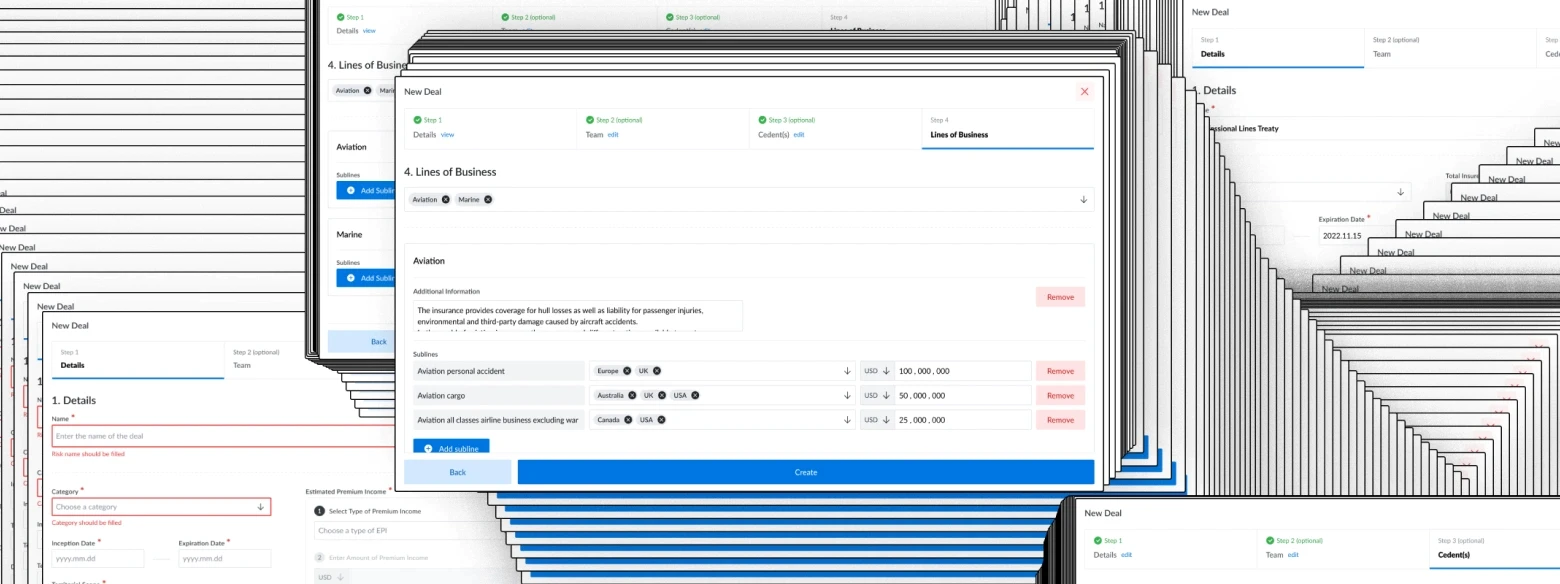
Existing and prospective clients often requested specific data fields to be included in the system, which were rapidly added to the form without considering the overall usability. This led to a clunky, multi-step form with numerous fields and complex conditional logic that varied based on deal type and other factors. I received a directive from Leadership to revisit and improve the user experience for entering deal data.
Approach
The initial directive was to enhance the form's UX/UI while keeping the existing implementation. However, I pushed for additional discovery work to identify challenges brokers face when filling in deal data.
I conducted interviews with the Customer Success team, which handles real-life scenarios during client onboarding and support, and reviewed their demo materials. I also spoke with several broker teams and analyzed deals at various placement stages. Key findings included:
Brokers often left many optional fields empty and filled mandatory fields with dummy data to pass form validation.
Customer Success received multiple client requests to make some obligatory fields optional.
Brokers usually updated the data gradually as the deal progressed.
Brokers frequently noticed missing or incorrect information late.
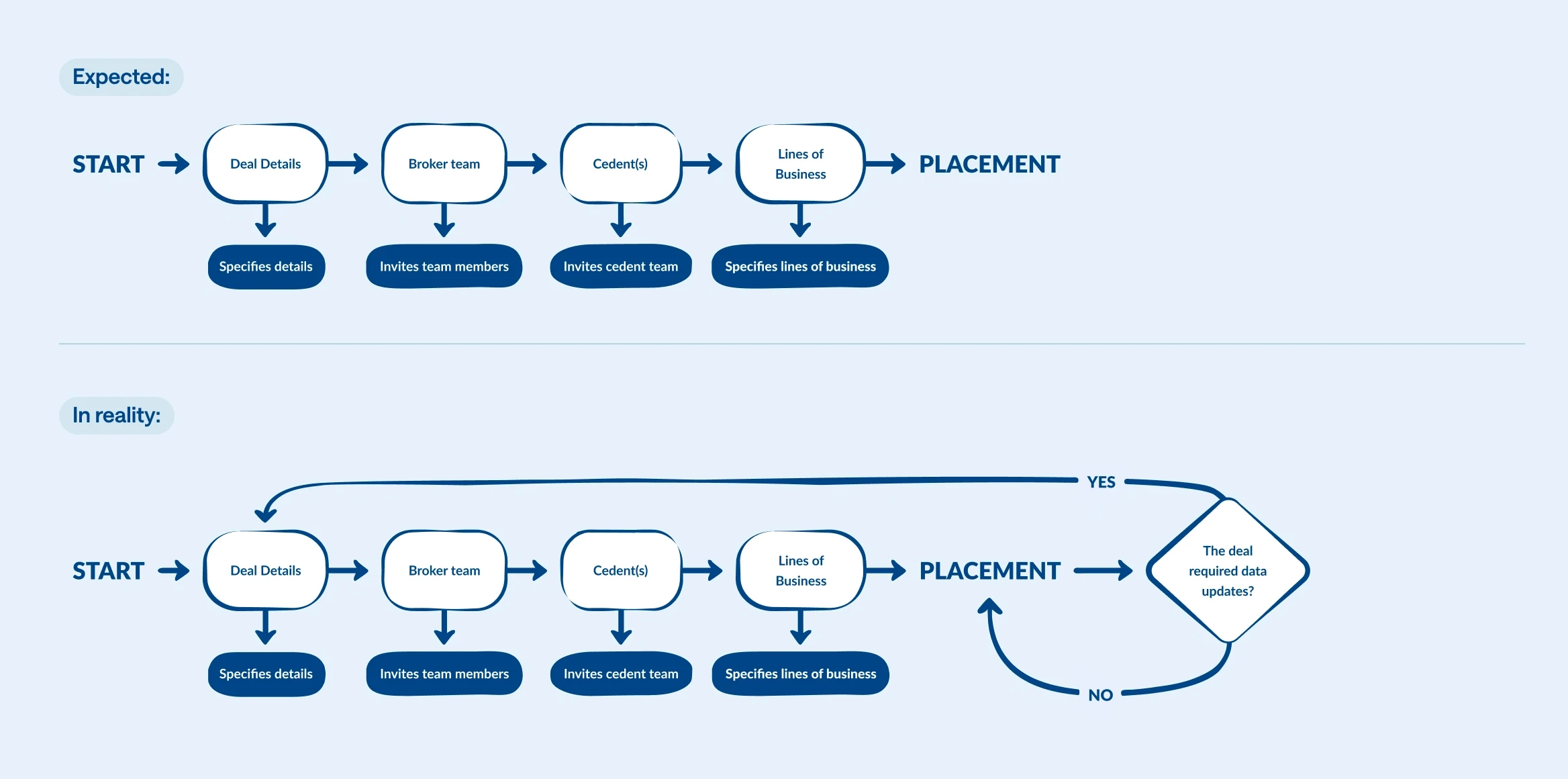
The Deals module was created expecting brokers to provide all information about the deal in advance. In reality this approach forced brokers to provide temporarily irrelevant data.
Brokers required a mechanism to allow them to update the necessary deal information at the right time.
Solution
I presented results to stakeholders, proposing a split of the deal creation process into two separate entities:
Simplified deal creation with only the essential fields.
Deal configuration organized into structured categories.
Additionally, I suggested a notification mechanism to alert users of any missing deal information during the placement process.
The goal was to streamline deal creation, allow incremental data updates, and ensure all necessary data was provided before advancing stages.
To-be
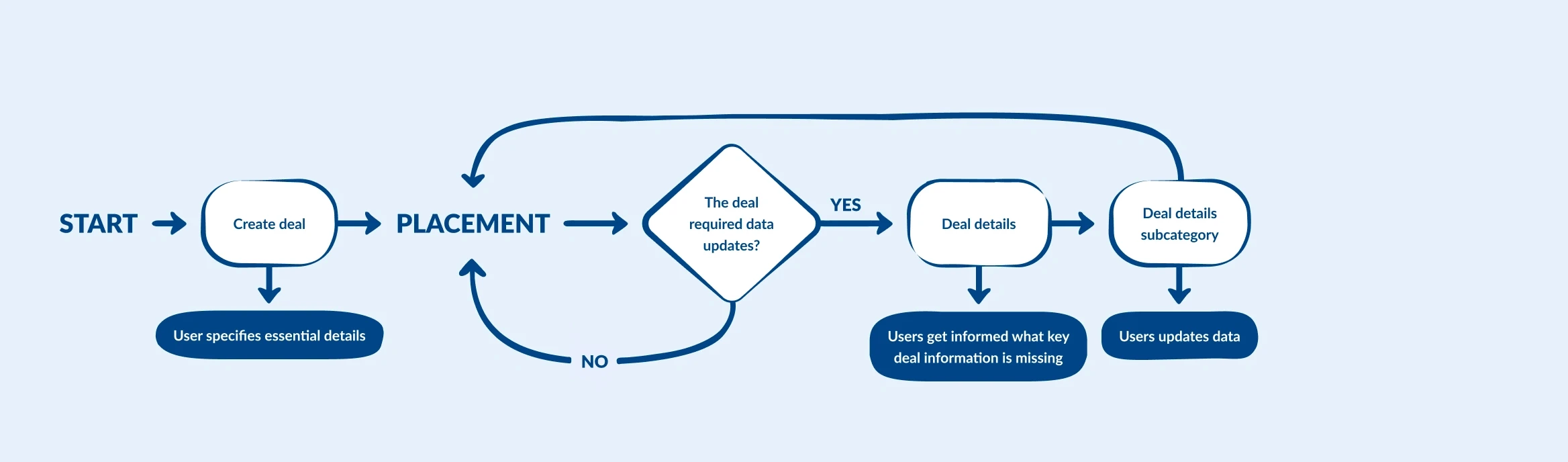
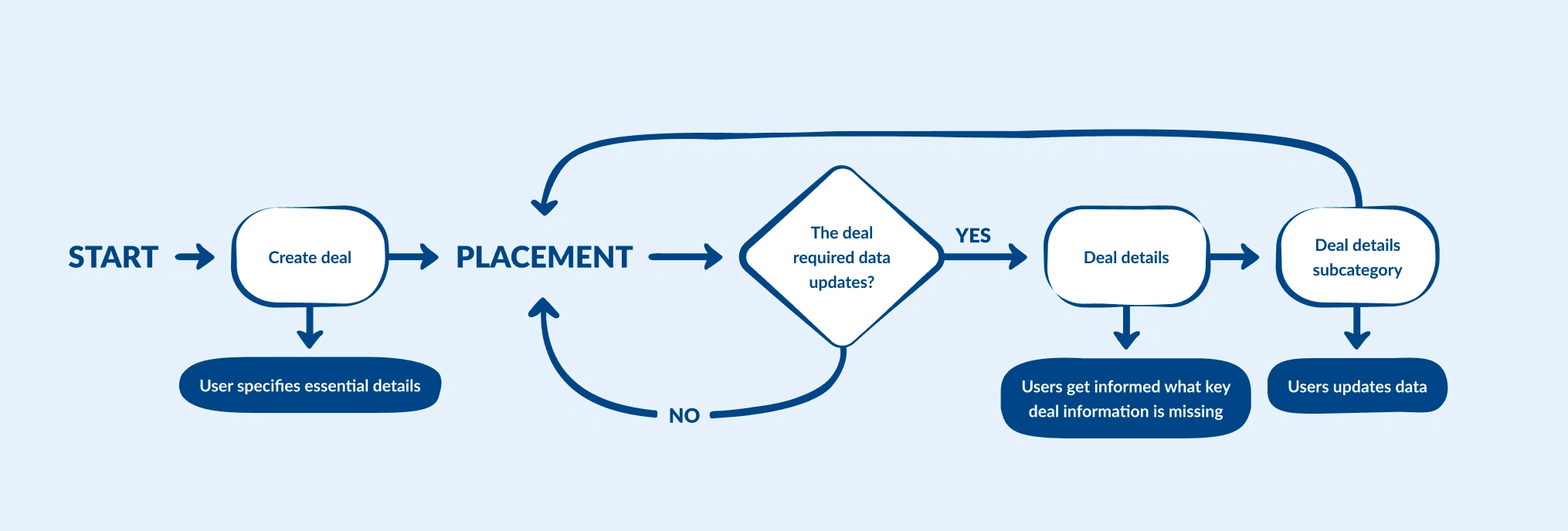
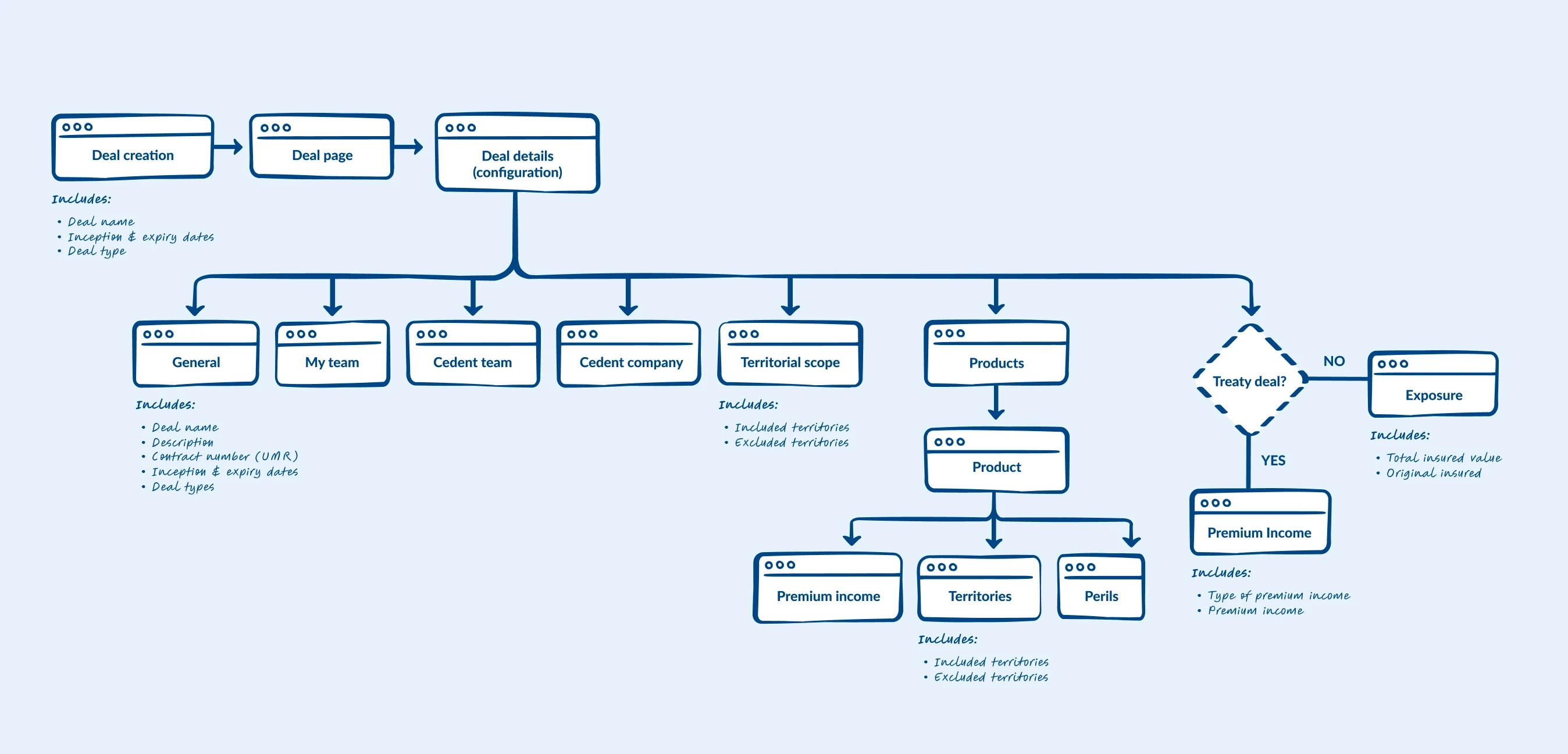
Engineering confirmed the logic was flexible with no technical blockers. Leadership and Product approved the idea. With a Product Manager, we demoed the updated flow to broker teams and received positive feedback. Through iterations, we finalized which fields should remain in the deal creation form (only 4!) and how to categorize other fields.
Sitemap
Prototyping
I developed interactive prototypes for the deal creation and configuration flows using the existing design system and interactive prototypes in Figma for early-stage usability testing.
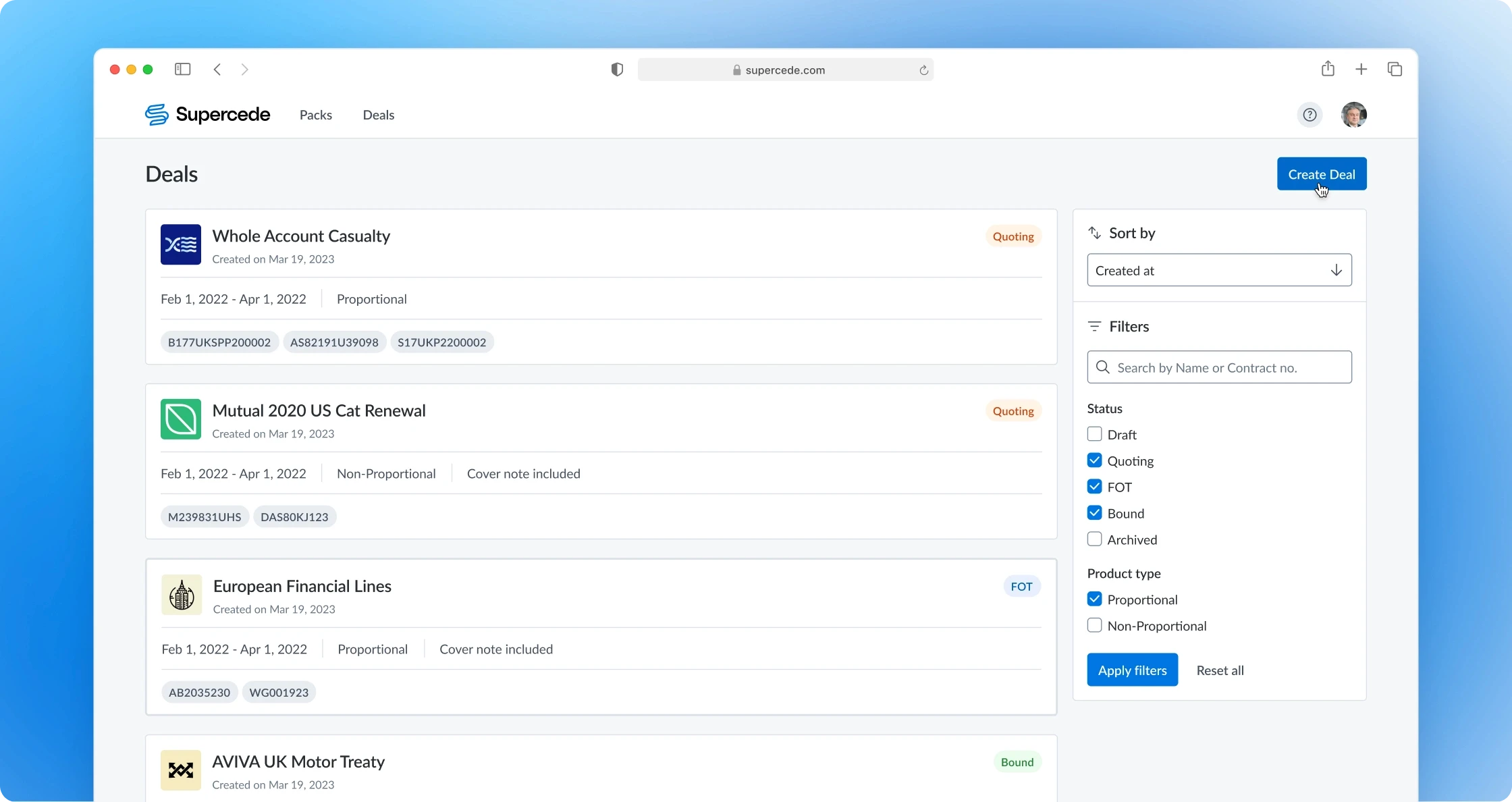
Deal list
The Deal list served as the central workspace for managing existing deals and initiating new ones.
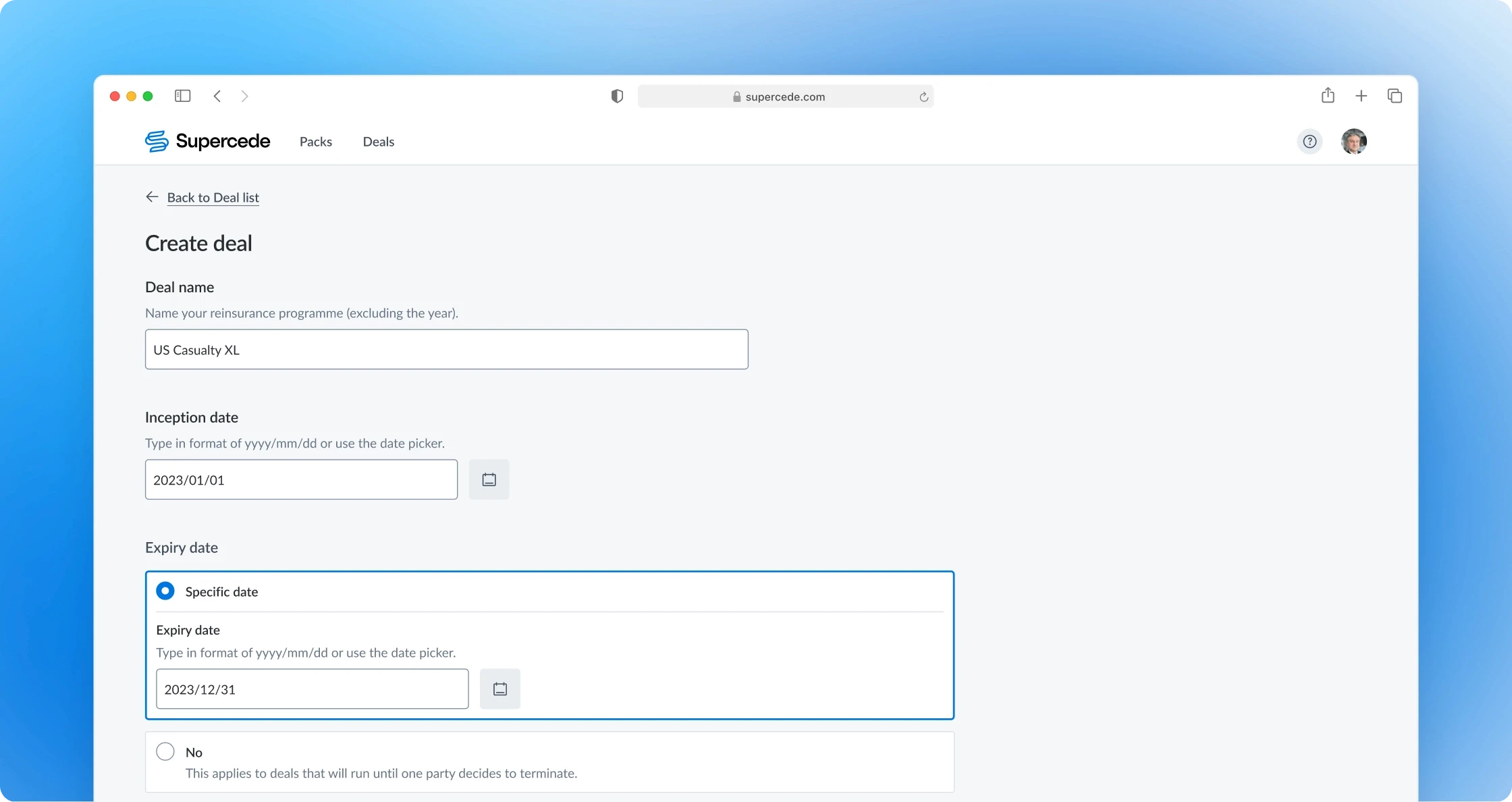
Create deal
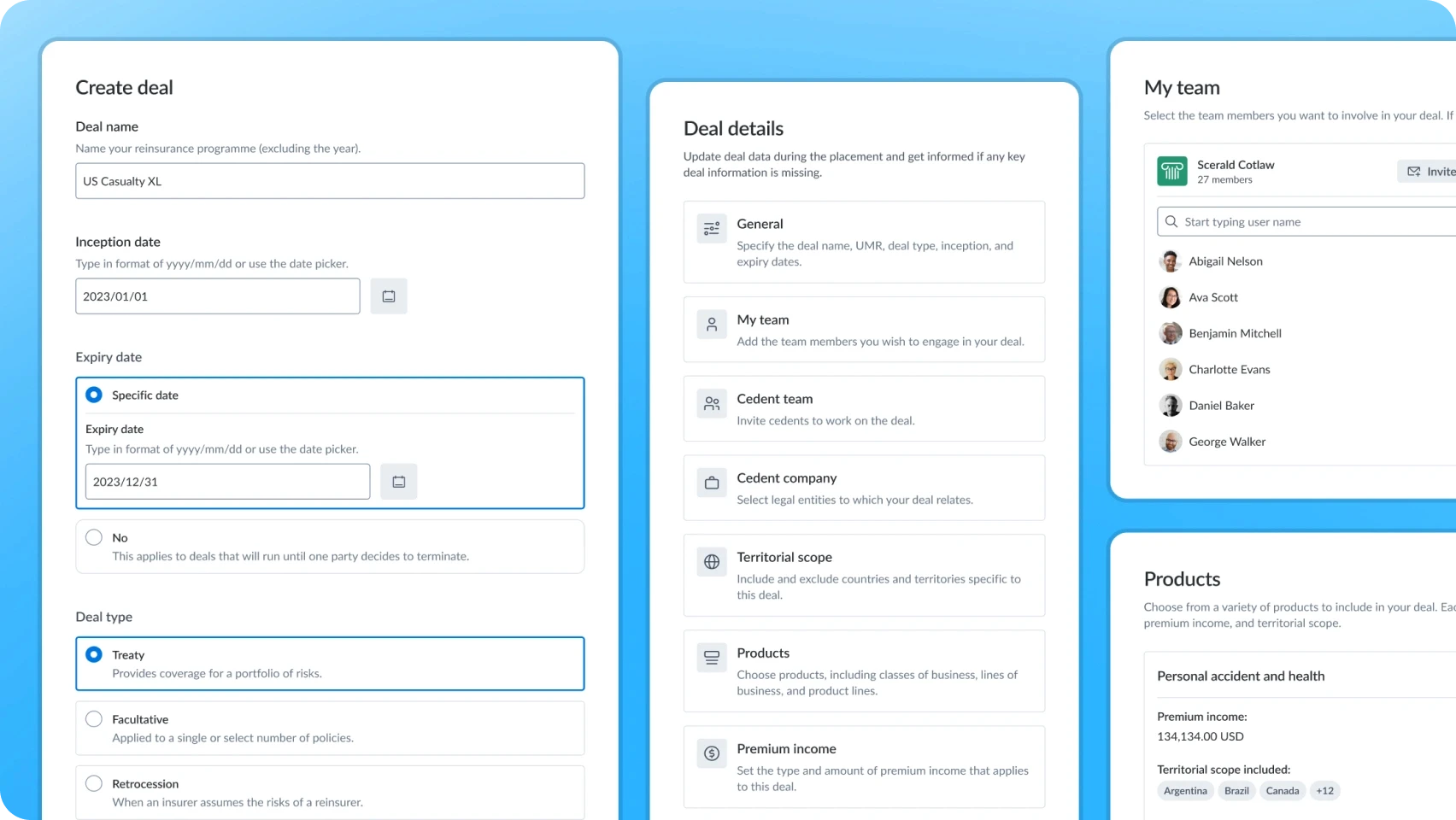
Deal creation was simplified from 4 complex steps into a lightweight flow with only 4 essential fields.
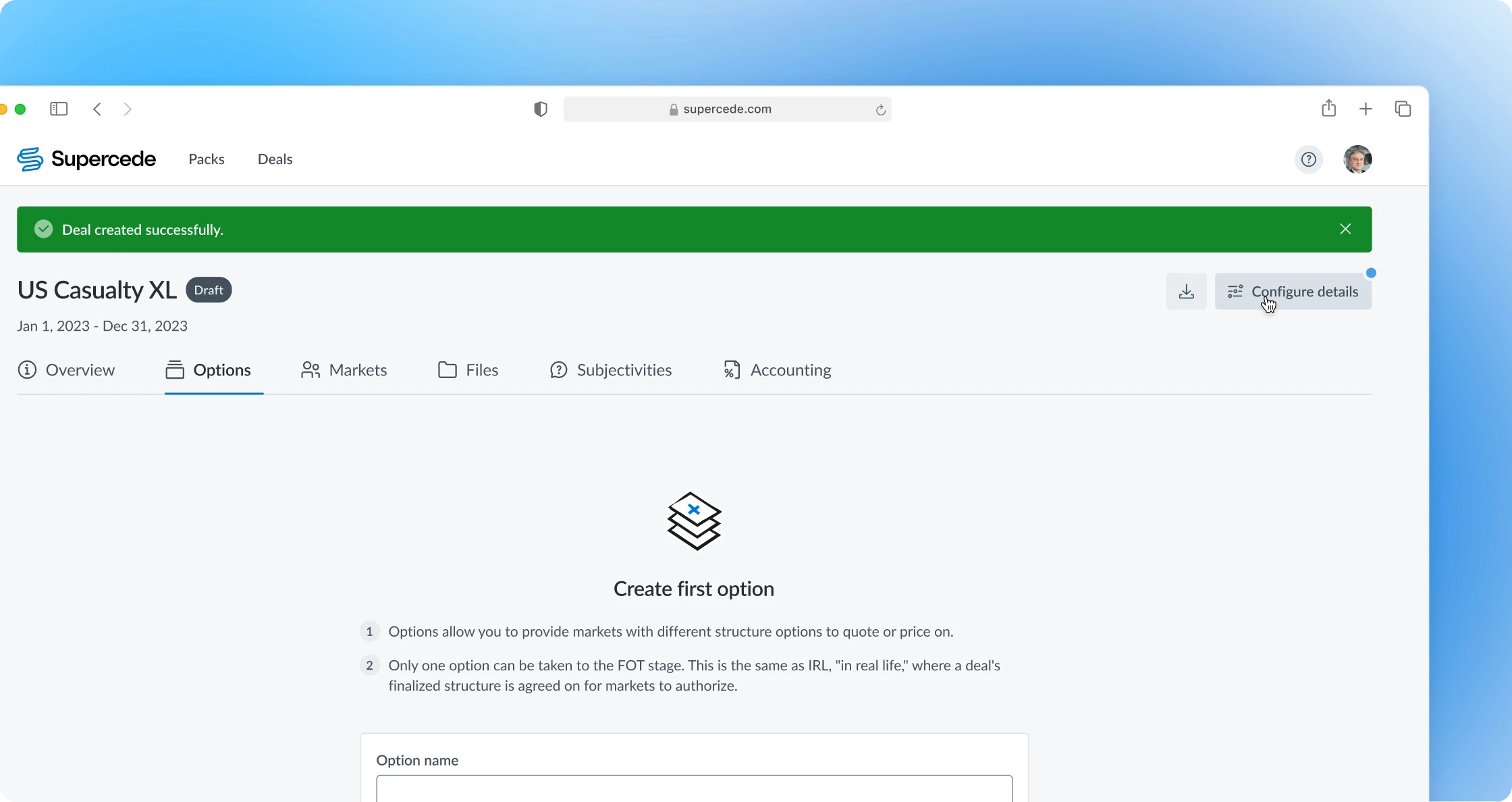
Deal page
A notification badge on the configuration button helped brokers identify when deal information still required updates.
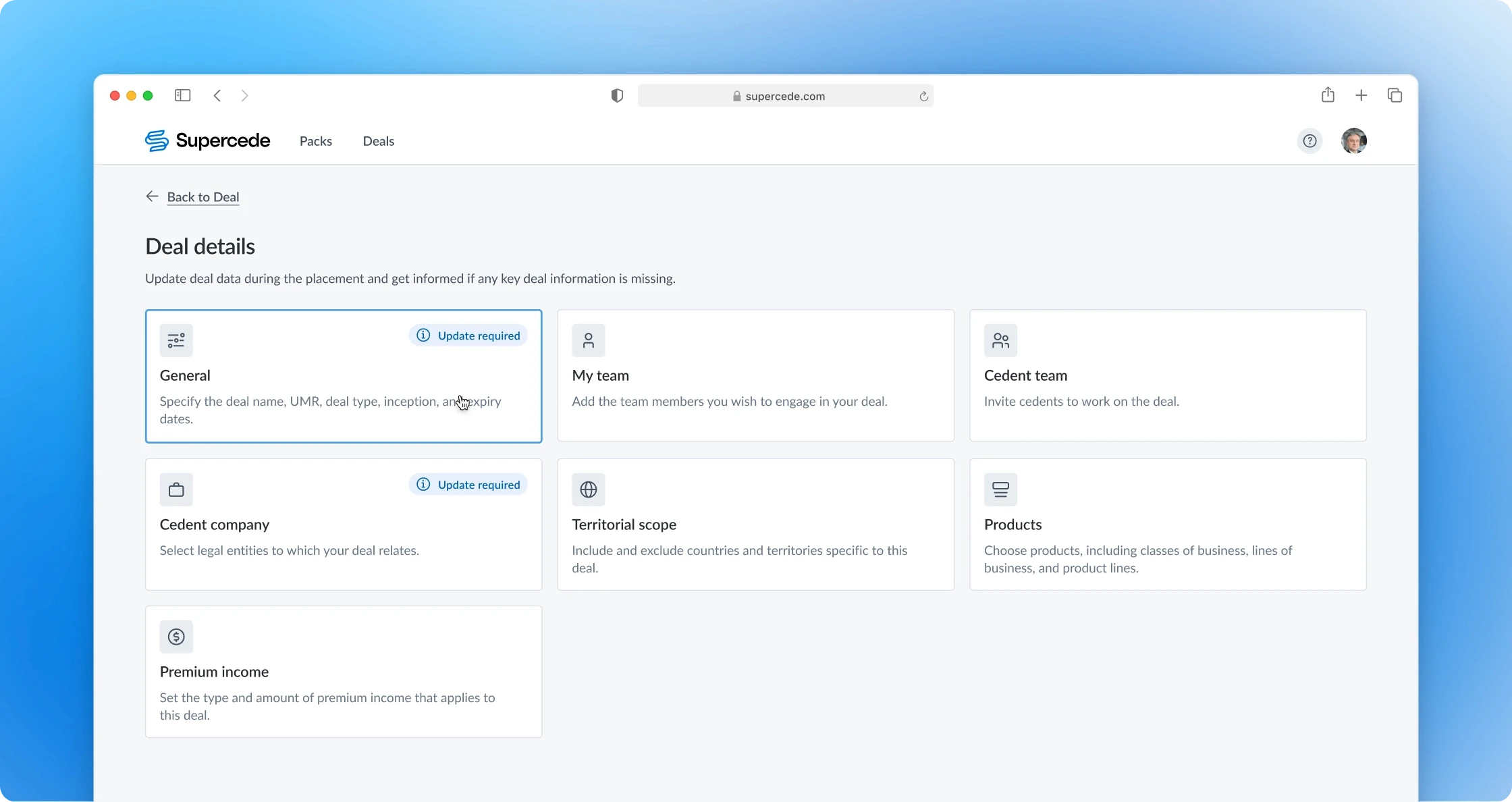
Deal details
Grouping deal data into focused categories reduced cognitive load and made missing information easier to identify through contextual status indicators.
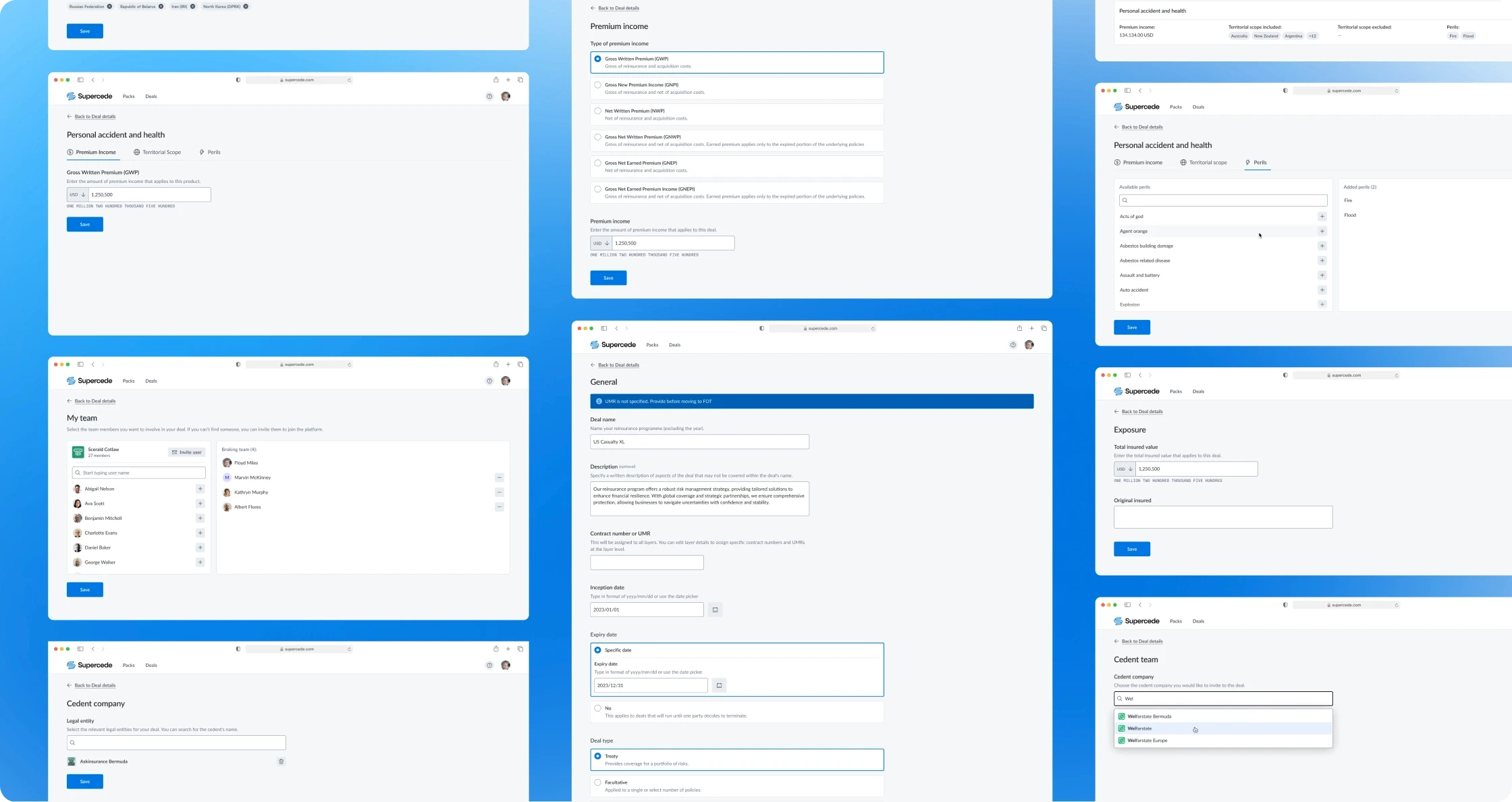
Deal details inner pages
Dedicated configuration pages helped brokers focus on specific data groups without overwhelming the overall workflow.
Design system
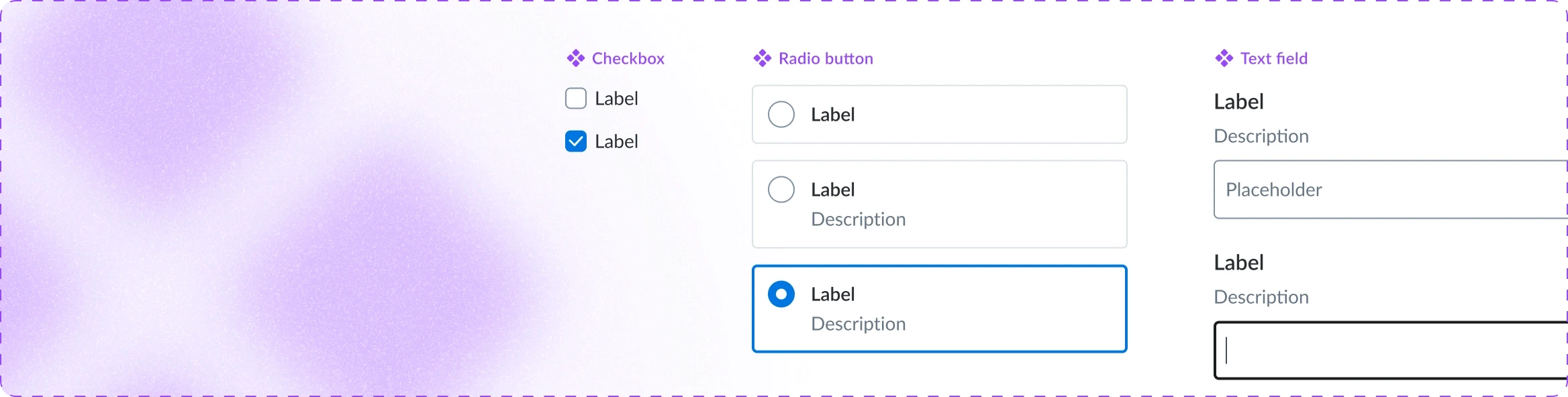
In updating the deal creation and details pages, I leveraged existing field components (text fields, checkboxes, radio buttons, selects, date pickers, buttons) to ensure consistency across accessibility, interaction behavior, and visual styling. I also created form guidelines to standardize the user experience across the company, reducing design and development time.
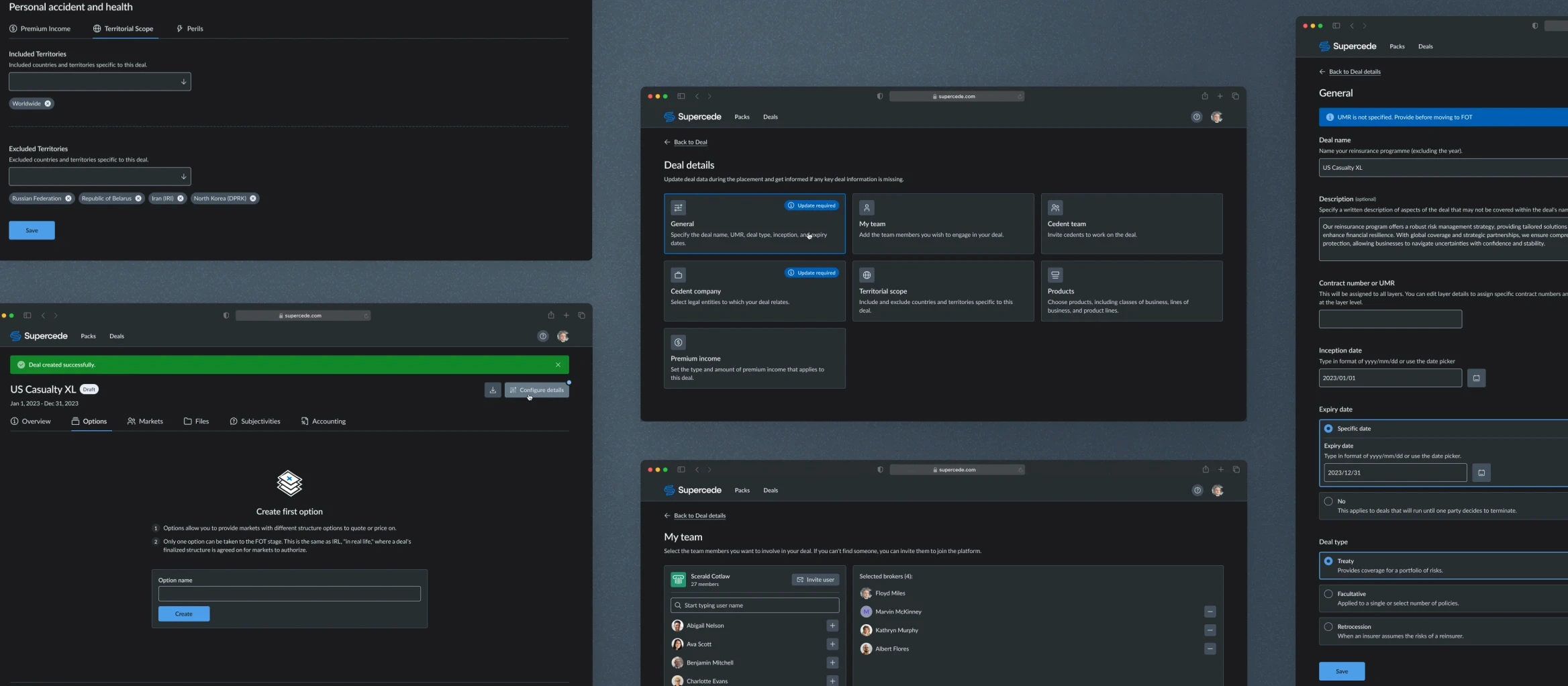
Applying color variables, all designs are available in light and dark themes out of the box, improving flexibility and user experience.
Rollout and adoption
We tested the new deal creation and configuration with a limited number of users and then presented it as a beta version for all the Deal clients. Training and support documentation were prepared and published in the company’s knowledge base.
Impact
The redesign enhanced the deal data entry experience, receiving positive feedback from brokers. This was reflected in an incremental increase in CES score. The new workflow became the standard experience for all broker teams using the Deals module.
Success metrics:

Reduced client development time
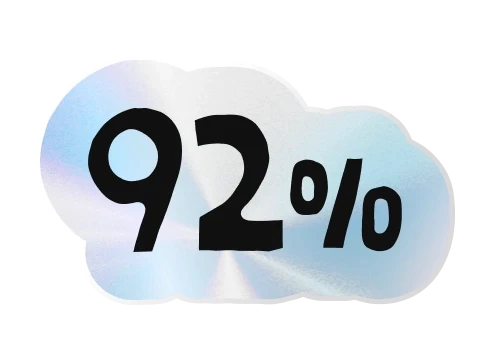
Deal creation CES
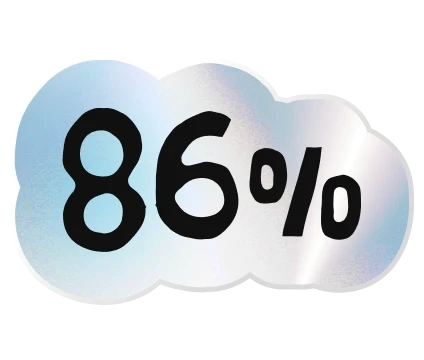
Deal configuration CES
To comply with my non-disclosure agreement, I have omitted and obfuscated confidential information in this case study. All information in this case study is my own and does not necessarily reflect the views of Supercede.